Stanford's Model Use of Force Policy: Research-Driven Tools for Safer Communities
Go to site
The platform provides communities with tools to evaluate and improve standards for use of force policies in police departments across the country, including an interactive Policy Explorer, ten model policy modules, and the largest systematic analysis of American force regulations to date.
Background
About the Client
The Stanford Center for Racial Justice at Stanford Law School works to counter racial division and political polarization through research and conversations exploring racial dimensions of contentious issues in America. The Center's Justice & Safety program focuses on evidence-based research to advance police reform and public safety policy.
About the Project
Five years after George Floyd's killing sparked unprecedented demands for police reform, policies regulating use of force remain at the center of America's most challenging debates about policing. While force policies vary dramatically across jurisdictions (one city may require officers to attempt de-escalation before using force, while another permits immediate weapon deployment), many communities lack the resources and comparative data needed to evaluate and improve their local policies. The Center's multi-year research project addresses this gap with its systematic analysis of 2,200 force regulations from 100 cities, 10 model policy modules drawn from national best practices, and an interactive Explorer application enabling policy analysis and comparison.
Goals and challenges
- Present complex policy research analyzing regulations across 100 cities in an accessible and useful way for diverse audiences—from community advocates to law enforcement officials
- Allow users to easily search for and compare force policies across police departments nationwide
- Design comparison features that highlight key differences in regulations between jurisdictions in a clear, visual way
- Create compelling, readable interfaces for 10 detailed policy modules covering technical law enforcement topics like de-escalation, deadly force, and weapons use
- Develop an information architecture that guides users through dense policy content without overwhelming them
- Make it simple for community members to find their local police department and understand how its policies compare to national best practices
Solutions and Features
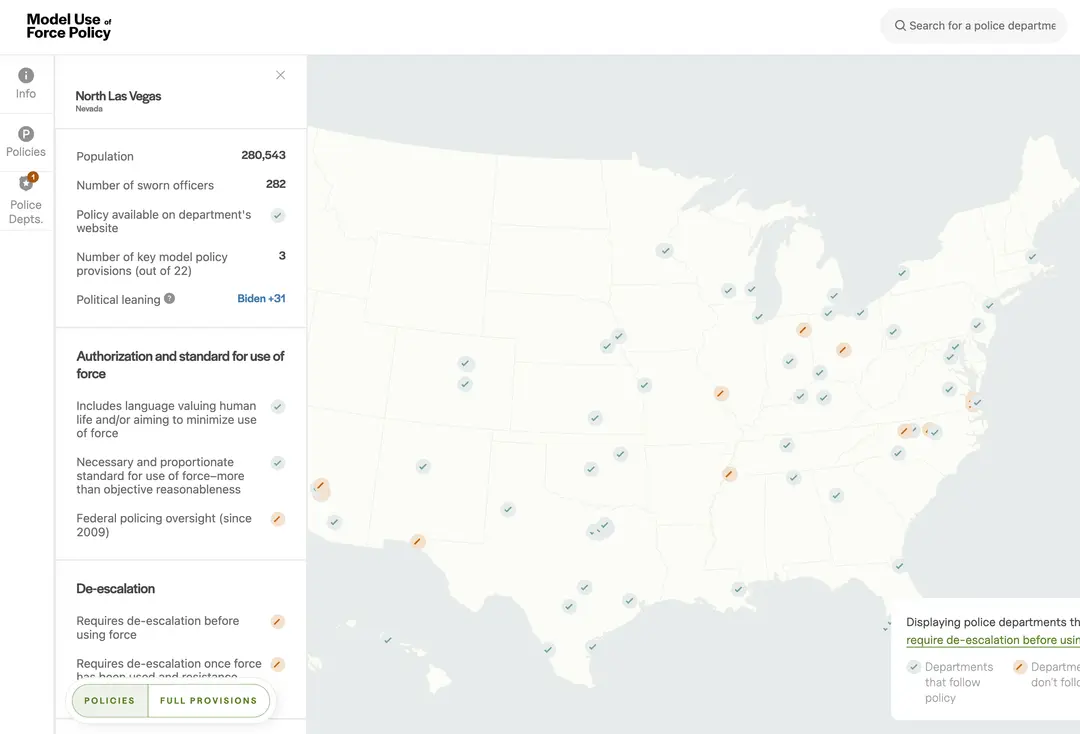
Interactive Policy Explorer allows users to search and filter 100 cities by policy type, compare regulations side-by-side, and view key excerpts of actual policy language, showing how different jurisdictions approach the same issues
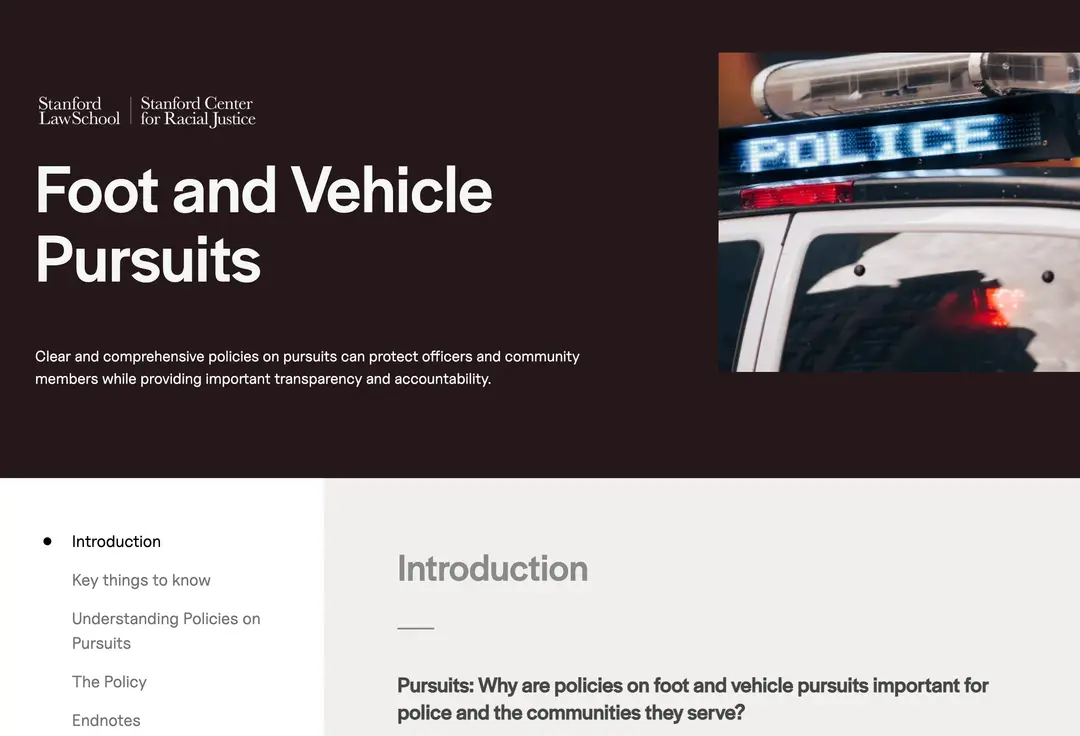
Scannable module pages break down complex policy topics into digestible sections with clear headings, visual hierarchy, and progressive disclosure, enabling users to dive deeply without cognitive overload
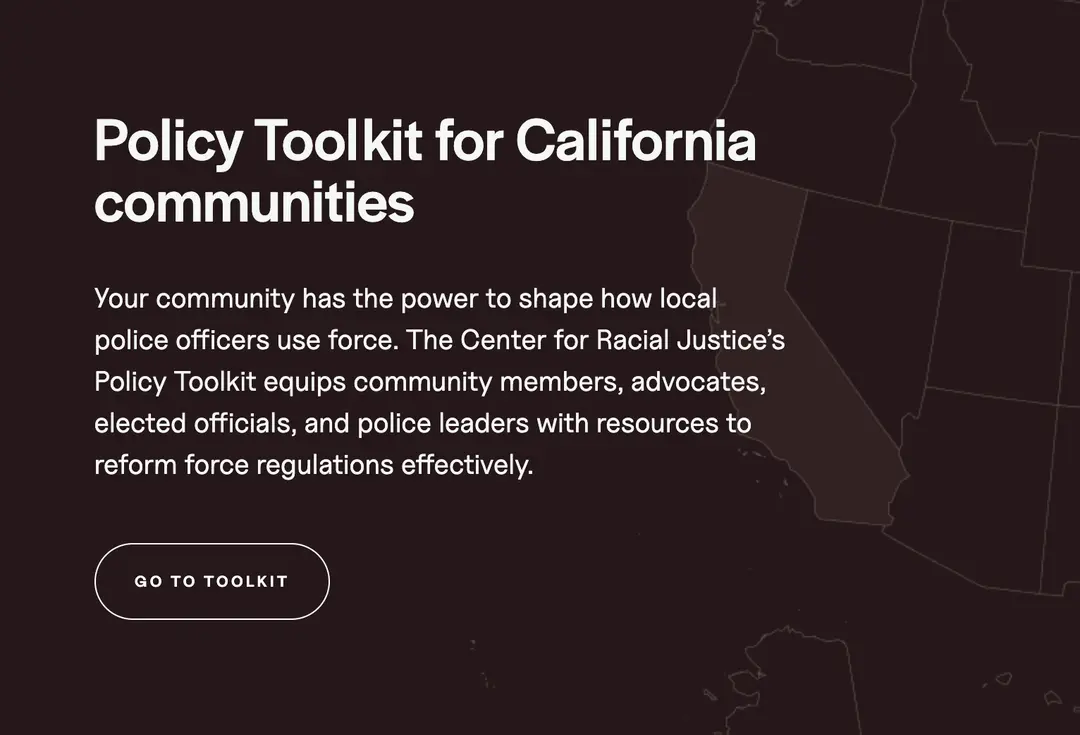
Resource hub for community action provides straightforward guides and toolkits for residents who want to advocate for policy changes in their own communities
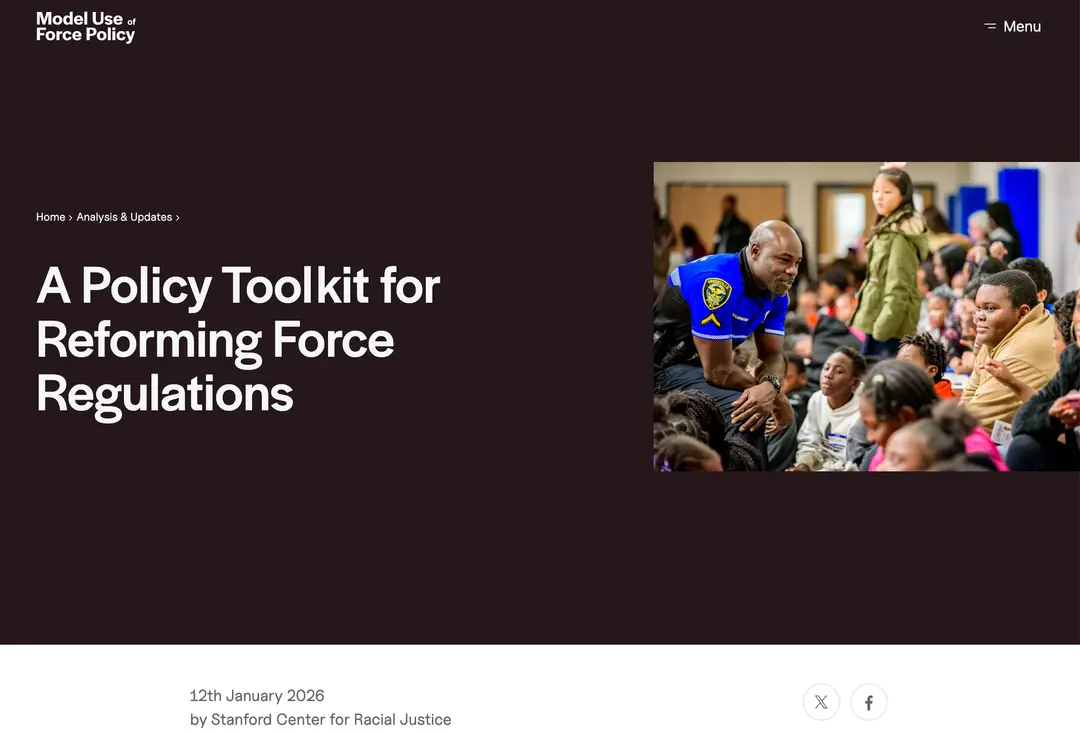
Blog-style updates section keeps content fresh with new analysis, case studies, and implementation insights
Coverage and Impact
 Local police policies are often buried in bureaucratic documents and hard to interpret. Our research on the 100 largest U.S. cities brings transparency to what has long been murky.
Interested in working with us?
Please use the contact form or write to us at info@hyperobjekt.com
